
The Fig Tree - Issue 15
with Featured Poet Laura Strickland

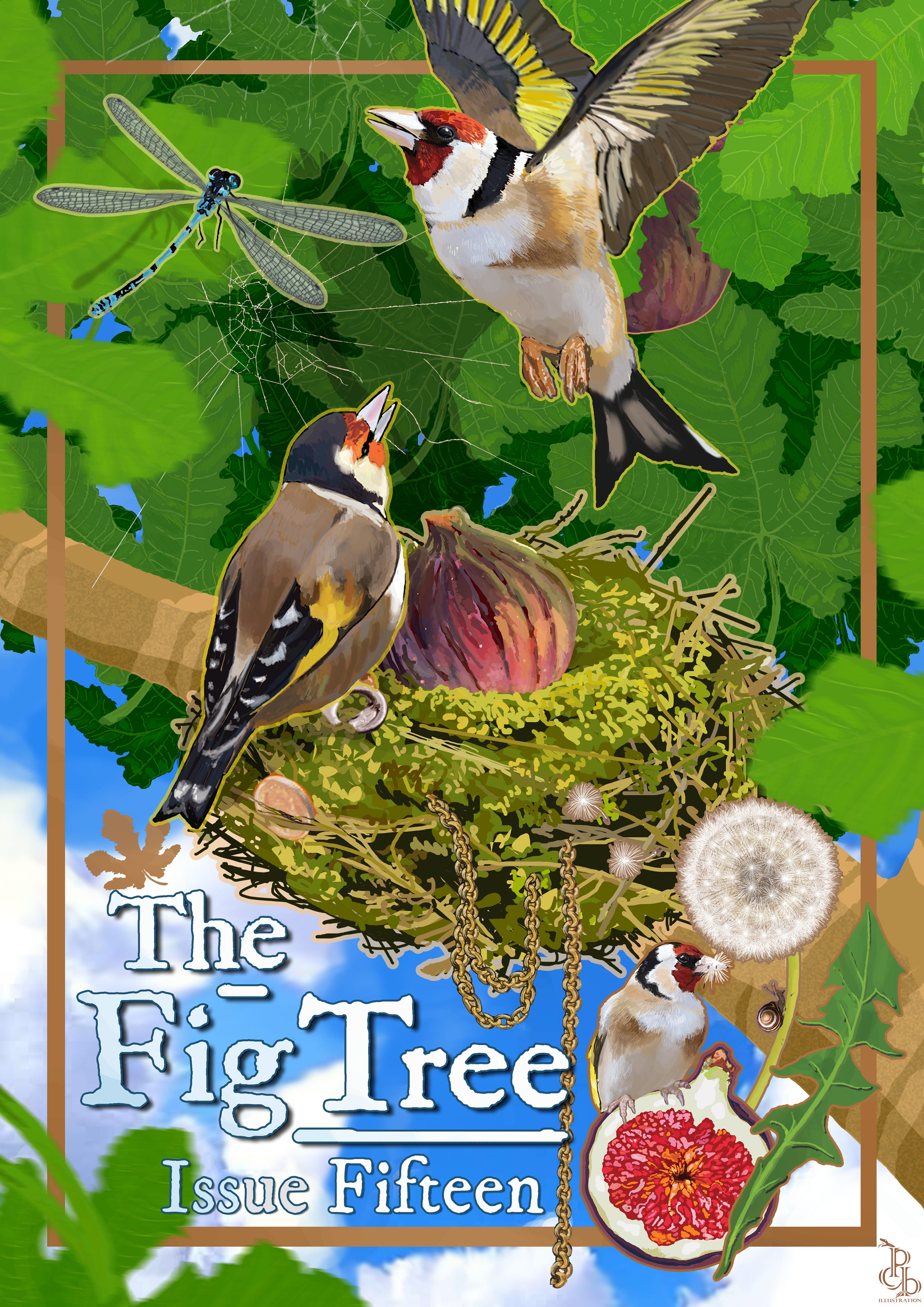
Welcome to issue fifteen of The Fig Tree.
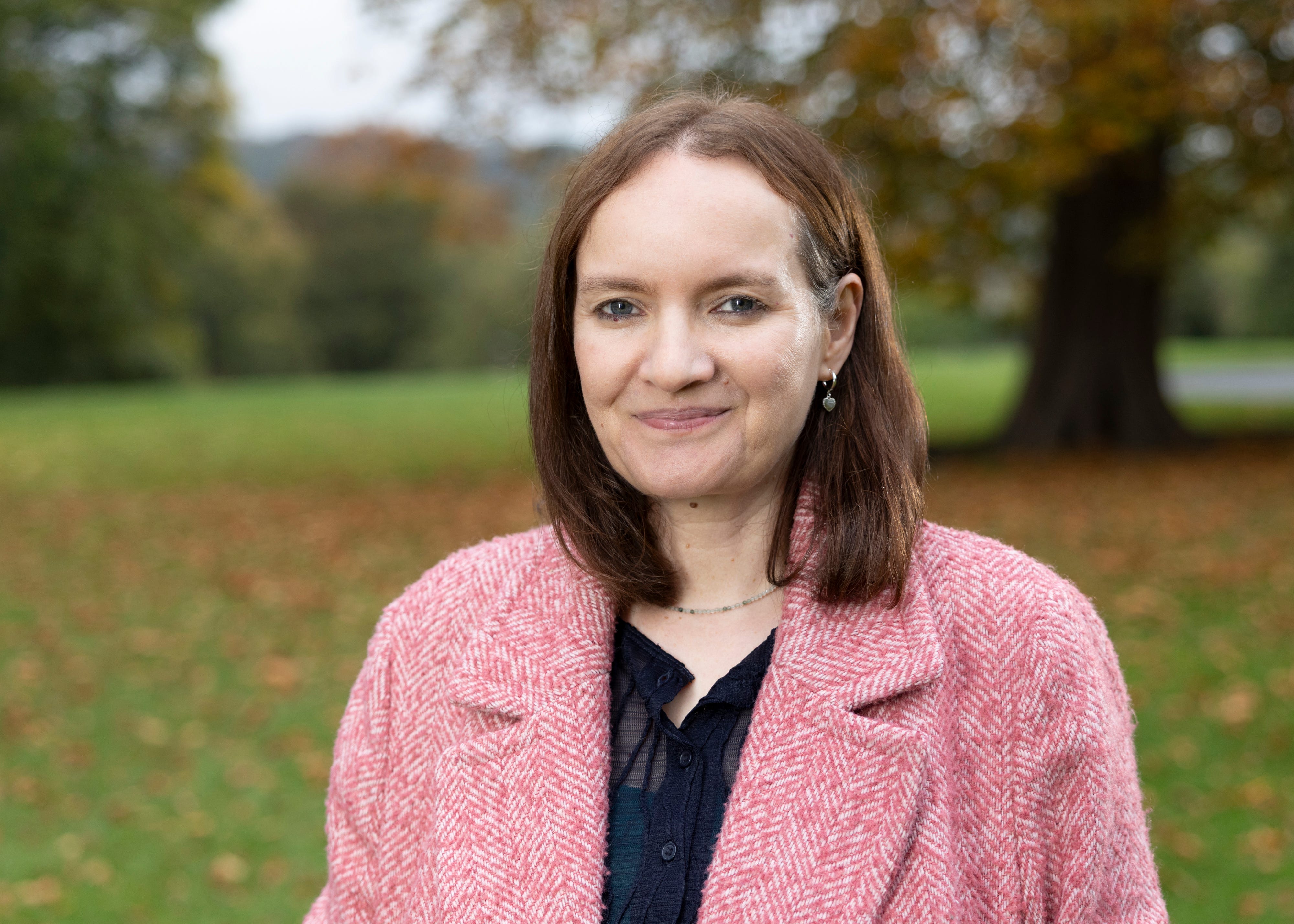
This issue’s Featured Poet is West Yorkshire-based Laura Strickland, who hasn’t appeared in the magazine before but who was a guest reader at the launch of Ian Parks’ The Sons of Darkness and the Sons of Light and who also read for the Read To Write group in Doncaster, where she led an interesting discussion on prose poetry. The poems she has chosen are from a project that deals with the attacks on, and murders of, women in West Yorkshire and Manchester between 1975 and 1980. As you will see, the poems deal with a difficult topic with sensitivity, focusing on the women and not the murderer.
This month the Women’s Poetry Anthology will be published by Crooked Spire Press – in addition to the poems that were published in the two online issues it has twenty or so further poems that haven’t been published before. The quality was so high that I took some of the submissions for these regular issues, and there were further poems that weren’t selected by the editors or by me that are certainly worthy of being published. It’s a superb collection of poems and I’m very grateful for the effort put in by my guest editors Stephanie Bowgett and Susan Darlington, and thanks also to Julia Deakin for a really insightful Foreword.
Next month we have a Special Issue of poems inspired by the General Strike of 1926, that look at all aspects of Trade Unionism and social justice. Thanks to another guest editor, Nick Allen, for sifting through what was a terrific set of submissions, bearing in mind how little time I allowed for writing them and the narrow submissions window!
If you enjoy this issue, consider looking at some of the back issues too – even if you’ve read them before they are worth another look.
Once again I hope you enjoy reading this issue as much as I did collating it. You are joining over 700 people who are reading the webzine on a regular basis.
Tim Fellows, Editor
Contributors: Laura Strickland, Ruth Aylett, Rachel Burns, Karen Downs-Barton, Jenny Hockey, Stephen Jackson, Phil Kirby, PD Lyons, Matthew Paul, Jane Pearn, Marguerite Penny and Paul Brough.
The Fig Tree Featured Poet – Laura Strickland
Roll Call
Think of us in colour Wilma opening presents with her children on Christmas morning Jayne at two days old, held tight by her mother Yvonne sunbathing in her back yard Patricia dancing with her mates on Saturday nights Josephine with her arms round her grandparents Vera on her doorstep watching kids do wheelies Jacqueline packed and ready for a school trip Barbara winning a gymkhana with her favourite horse Marguerite climbing on her 50th birthday at Windermere Irene on her first holiday to Spain Helen building snowmen with her twin sister Emily fixing roofs with her lads Jean at Blackpool with her family, the lights shining behind them
Laura Strickland
Footnote: Ekphrastic on the black and white photos of thirteen women murdered by Peter Sutcliffe between 1975-1980.
Emily
Can you hear the storm Emily?
Listen how it breaks the slates free,
how it clatters them into the yards
and the houses give in.
Tomorrow the bloke from number nine
will ring and say
Can you come down? Bloody roof’s gone.
I’m looking at the pissing sky through me ceiling.
Tonight, let the Gaiety wait –
go to the chippy,
make cocoa for the kids,
pour yourself a drink,
bring a blanket from upstairs,
put Coronation Street on.
In the morning stock up the van,
take Syd to his jobs,
drop the kids off at school,
see Jean and Mary from the mill –
but hold on for tonight Emily
for tonight, hold on.
Laura Strickland
Footnote: In memory of Emily Jackson. First published in Anthropocene Poetry Journal, 2025.
What breaks the silence
from the moment a woman lies alone
face down in fields or parks or wasteland -
a dog barking in the distance
the rattle of a milk van
a car door slamming
a paper boy sounding his bell
the opening of a bedroom window
the siren of a police car
trees breaking under the wind
sparrows squabbling at dawn?
Or is it the squelch of boots on frost
the swipe of hair from her face
and someone saying –
Come on love, can you hear me?
Laura Strickland
Laura Strickland is a carer and poet from Saltaire and was a New Northern Poet in 2025. Her publications include The North, Strix, The Frogmore Papers, Ink, Sweat and Tears, Northern Gravy, Propel, Atrium, Anthropocene and Butcher’s Dog. She was twice Highly Commended in Nine Arches’ Primers and was one of 12 poets selected for Lancaster Literature’s Mosaic 2023 by Caroline Bird. Laura holds an MA in poetry from Manchester Metropolitan University and is a member of Dream Catcher’s editorial board. She was longlisted in the National Poetry Competition 2023 and shortlisted for the Bridport Prize 2025.
The Fig Tree Selection – July 2026
This section features up to ten poems, with a maximum of one per poet per issue.
Geography
Deputy Headmaster ‘Butch’ Day turfs me out
of the prefab classroom for a quip he laughs at,
because it wasn’t what I said; it was my ‘crass’
timing, damming his discourse on oxbow lakes.
In April, Argentina’s invasion of the Falklands
prompts Butch to spend a lesson raging about
‘the Japs’, who ‘worked, starved and murdered’
his closest friends, thus ‘our lads need to stick it
to the Argies’; a syllogism I refute so doggedly
he orders me to wait outside his office at the end
of the day. But instead of a bollocking, he gives
me a pep talk: ‘attitude needs to match wit’, etc.
I see, pinned on the board behind his Mr Whippy
hair, a yellowed cutting from the Surrey Comet:
School disco terror. At the private school across
the way, skinheads defaced walnut panels etched
with names of old boys killed on active service,
then battered Butch’s counterpart into hospital.
Two terms on, the Fairfield’s carpeted overnight;
we snowball the enemy, even their remonstrating
head. In assembly next morning, Butch applauds,
then rants about ‘the shame’ we’ve brought upon
our school’s ‘proud name’. His quiff stays stiff
throughout his unhinged apportioning of blame.
Matthew Paul
The Coast Guard Captain
The first thing you notice,
the rough-hewn surface
with three empty screw holes,
where the bell’s hanger clung
to the cabin of the boat,
the bell itself, once rung
with a bronze clapper
attached to a stretch of rope,
swung back and forth by
the Coast Guard Captain—
and that it rests now,
black metal silent,
near a broken mantel clock
on the bookshelf of his son,
attached to nothing
—slowly losing all memory
of having ever been in motion.
Stephen Jackson
Fuchsias
At lunch, we do not talk
about his murderous struggle
with the four leylandii,
their stumps now ground away —
as if such gestures of effacement
make it possible to think
at any moment he may step
through time, as through
the patio doors, and sit
remarking on the pair of robins,
how the colour of their breasts
is orange like the berberis
in which they perch, or on the way
the hills behind the house seem
filled with spring light, if only
he’d the words to say such things.
Instead, we focus on the dazzling
fuchsias (more your flower than his),
their heavy drooping heads.
Phil Kirby
My Grandfather Says
He likes cycling across the fell
bicycle clips hugging his trouser legs
always donning his flat cap.
He says, it is only spitting,
when it starts to rain.
Says, it will soon get o’er,
when you worry yourself silly.
Says, can’t complain,
when you ask how he is.
You watch as he cuts
honey from the frame,
the knife slicing through
honeycomb, then dropped into jam jars
honey dripping down the sides.
He gives you the knife to lick clean.
Honey his cure for every ail.
You wish you’d done more
when the years spent mining took hold,
his laboured breath at the open window.
Remembering that last time,
you took him for a drive, across the fell
down to Deerness, the sky blue, endless.
Rachel Burns
Margret Who Waits In the Falling Sky
on the grass
by the reservoir
side by side
looking up
pick a star
any one
that’s your star
focus on it long enough
the sky will fall
but don’t worry
your star will draw you up
keep you safe
just so you’ll know
wherever you go I’ll be that star
waiting in the falling sky for you
PD Lyons
Unbound
She knows a butterfly is in the oil drum.
She hears its tissue wings beat
against the steel, feels them
tearing on rust.
The creature emerges, as
magnificent as red, blue
and yellow stained glass.
It rests on the warm metal,
wings pulsing open and closed.
She watches it rise
on a sigh above bright leaves.
Her heart flits with it
skywards, glancing
down once
to her wanting body, twisted
in her chair below.
Marguerite Penny
When I phone the North East
to order another screening kit
after reaching that age, the voice
on the line is Alington House,
toddlers in backpacks, Greenwells
and loaded prams down Claypath
to cobbles around a man on a horse,
to the tunnel down into the market
for cracked eggs and boiling fowl,
always silky vintage frocks
for dancing on college lawns
after the children had gone to bed —
the voice is Doggarts, the coalman,
rainy winter days and friends too close
to keep, a long haul home up the hill.
They say we stow time in a bank
to spend itself before our eyes
the second our brakes give way —
yet all the while it’s live in a voice.
Jenny Hockey
To Blossoms Mum Grew from Rusty Paint Tins
Her answer to a zoetrope of temporary accommodation we called ‘home’ -
the flea pits, floorboards bowed at wormy joists, drab tower blocks - were
the dreame-scapes Mum painted while we slept. Wood was a bitumen edged
sonnet of black beauty, concrete spray graffitied to frame phantom rugs her
imagination cultivated over weeks, months. Scavenged paint green-fingered
the gardens of Roses and Castles, meadows and ferneries from bare patches.
Still to be neat she chalked grids, a book spine used as a slipstick ruler, tho
cherry ripe umbels, vines and knotted brambles straggled unpruned over neatish borders.
The will to create a richer canvas once resulted in the roots and branches of
a poison tree gilded in enamel that wouldn’t dry. We walked a rim of stygian
darkness for days, dared not cross the liquid centre. Mum was a true Roma,
she dwelt among untrodden ways, strew petals on paths of her own design.
Karen Downs-Barton
Footnote: This poem uses a ‘Spare Rib’ form I invented in response to anthologies that exclude female voices. The bold text are titles from A Book of English Poetry * Chaucer to Rossetti * ed. G. B. Harrison, Penguin (1983). Each ‘rib’ presents a decolonised female narrative voicing experiences outside the scope of the original text.
Moving on
The house goes quiet when the last child leaves,
no arguments and dirty clothes on floors,
but when you please yourself, who do you please?
Now they’re at Uni you no longer squeeze
between muddy kit and bike to get indoors.
The house goes quiet when the last child leaves.
You watch News or Bake-off at your ease
without those endless programme-wars.
but when you please yourself, who do you please?
An end to shouting, days of sullen freeze;
there’s nobody to nag to do those chores.
The house goes quiet when the last child leaves.
You halve your shop for biscuits, milk and cheese,
cutlery stays sorted in the kitchen drawers.
But when you please yourself, who do you please?
You thought you’d not be one who grieves
for their smiles and hugs, their groans and roars.
But the house goes quiet when the last child leaves:
when you please yourself, who do you please?
Ruth Aylett
This, at last, is the ceremony
Scarlet beads well up from a bramble scratch, and I think
about blood. Bright arterial fountains, or the thick burgundy
returning to the heart, drawn up from a vein for all the stories
it can tell. Then there is the blood between the legs,
the calendar-stain, the blood of relief, or grief.
The children were playing and fighting in pairs.
He was far off, unconcerned. Sudden pain shocked me,
halved me like an incision clean through, and I folded over.
Something seemed to break, break free, and I reached down.
I held you in my palm, warm, no bigger than a goose egg,
wrapped in red-streaked caul. Flesh of my flesh. My mouth
a silent oh. I hadn’t known, I hadn’t guessed.
What could I do? The children were fighting and playing
in pairs, he was far off, unconcerned. I whispered some words,
I whispered forgive me. And I flushed you away.
Forgive me. What else could I do? But still, after all these years
a kind of endometriosis, a patch of crimson velvet
lodged in my mind, where you start to root, then stop.
Always stop. And I remember, I remember you
and I remember who you might have been.
Jane Pearn
Contributors
Ruth Aylett lives and works in Edinburgh. Her poetry has been widely published in magazines both online and in print, and in anthologies. Her pamphlets Pretty in Pink (4Word) and Queen of Infinite Space (Maytree) were published in 2021. For more see https://ruthaylett.org
Paul Brough is a Yorkshire based illustrator. You can see more of his artwork here
Rachel Burns has been published in literary magazines including The Rialto, Magma, Atrium, and Ink Sweat & Tears. She won the Bylines Sky Hawkins Poetry Prize in 2025. Her first poetry collection is forthcoming from Broken Sleep Books later this year.
Karen Downs-Barton is a neurodiverse writer from a multiracial, working-class background. Her collection, Minx, is published by Penguin and her pamphlet, Didicoy, Smith|Doorstop, was a Poetry Book Society recommendation. Her poems have featured on Radio 4’s The Verb, at Ledbury Poetry and Edinburgh International Book Festivals, and are widely anthologised.
Jenny Hockey is a Sheffield poet and retired anthropologist who has received a New Poets Award from New Writing North. Her collection Going to bed with the moon was published by Oversteps Book. She reviews regularly for Orbis magazine and, with Carol Komaromy, has published a memoir of family life and war (familyhistoryandwar.com). jennyhockeypoetry.co.uk
Stephen Jackson is a working-class poet who lives in the US Pacific Northwest. His poems appear in numerous magazines, journals, and anthologies, with more recent work in fourteen poems, Prairie Fire, the International Human Rights Art Movement anthology, A Human Voice, and the Washington State Queer Poetry Anthology.
Phil Kirby’s collections are Watermarks, The Third History and a chapbook, Towards A Theory of Being Human. Work also recently appeared in Sampler Two from Mariscat Press. Poems in Acumen, Poetry Birmingham, Poetry Ireland, Stand, amongst others. Writing as P.K. Kirby, a teen novella, Hidden Depths, is on Kindle.
PD Lyons was born and raised in the USA but since 1998 has resided in Ireland. Has worked as dishwasher, floor washer, textile mill labourer, construction worker, pesticide sprayer, fire safety inspector, toy shop manager, substance abuse councillor, and women’s shoe shop manager - currently cutting grass in a small medieval village in Co. Westmeath Ireland. Lyons published poetry collections by Lapwing Press, Belfast and erbacce Press and was the winner of the annual erbacce press International Poetry Competition for 2019.
Matthew Paul hails from South London and lives in South Yorkshire. His second poetry collection, The Last Corinthians, was published by Crooked Spire Press in 2025, following The Evening Entertainment (Eyewear Publishing, 2017). He is also the author of two haiku collections and regularly reviews for The Friday Poem. www.matthewpaulpoetry.blog
Jane Pearn’s poetry has appeared in several magazines including Brittle Star, Spelt, Obsessed with Pipework, and Ink, Sweat & Tears. She has been longlisted twice in the National Poetry Competition, and in The Rialto Nature and Place competition. Her third collection, Picking Up Signals, was published in January 2025.
Marguerite Penny lives on the edge of a Yorkshire moor. She is the guardian of a small but busy garden with many and diverse inhabitants and visitors who endlessly enrich her life and to whom she is deeply grateful.
All contributors retain copyright of their work.
Subscribe below to get The Fig Tree and other news direct to your email inbox - it won’t be often, we promise!
Another excellent issue of this important magazine. Thank you Tim
Great poetry from Laura Strickland