
The Fig Tree - Issue 12
with Featured Poet Stewart Carswell

Welcome to issue twelve of The Fig Tree.
That brings us to two years of publications, twelve regular issues and two specials which resulted in the Coal Mining Anthology published by Crooked Spire Press last month. The 2024 printed anthology launched last April has almost sold out, with preparations for the 2025 edition beginning in the New Year.
This issue’s Featured Poet is Stewart Carswell, who appeared in the Fig Tree in 2025 and impressed us enough to ask him to submit for this slot.
This issue contains the first sestina we have published, and Bob Chiswick has used the complex form very effectively to create a beautifully constructed elegy.
2026 promises to be a bumper year for The Fig Tree and Crooked Spire Press – keep an eye out on Substack (if you subscribe – it’s free - you will get information on publications and events in advance). We hope to be taking events to different parts of the UK next year, particularly linked to the Coal Mining Anthology.
Once again I hope you enjoy reading this issue as much as I did collating it. You are joining over 500 people who are reading the webzine on a regular basis.
Thank you all and have a happy and healthy New Year.
Tim Fellows, Editor
Contributors: Stewart Carswell, Bob Chiswick, Susan Darlington, Alan Davies, Greg Freeman, David Harmer, Graham Lock, David Lukens, Mike O’Brien, Hannah Stone, Tim Taylor and Paul Brough.
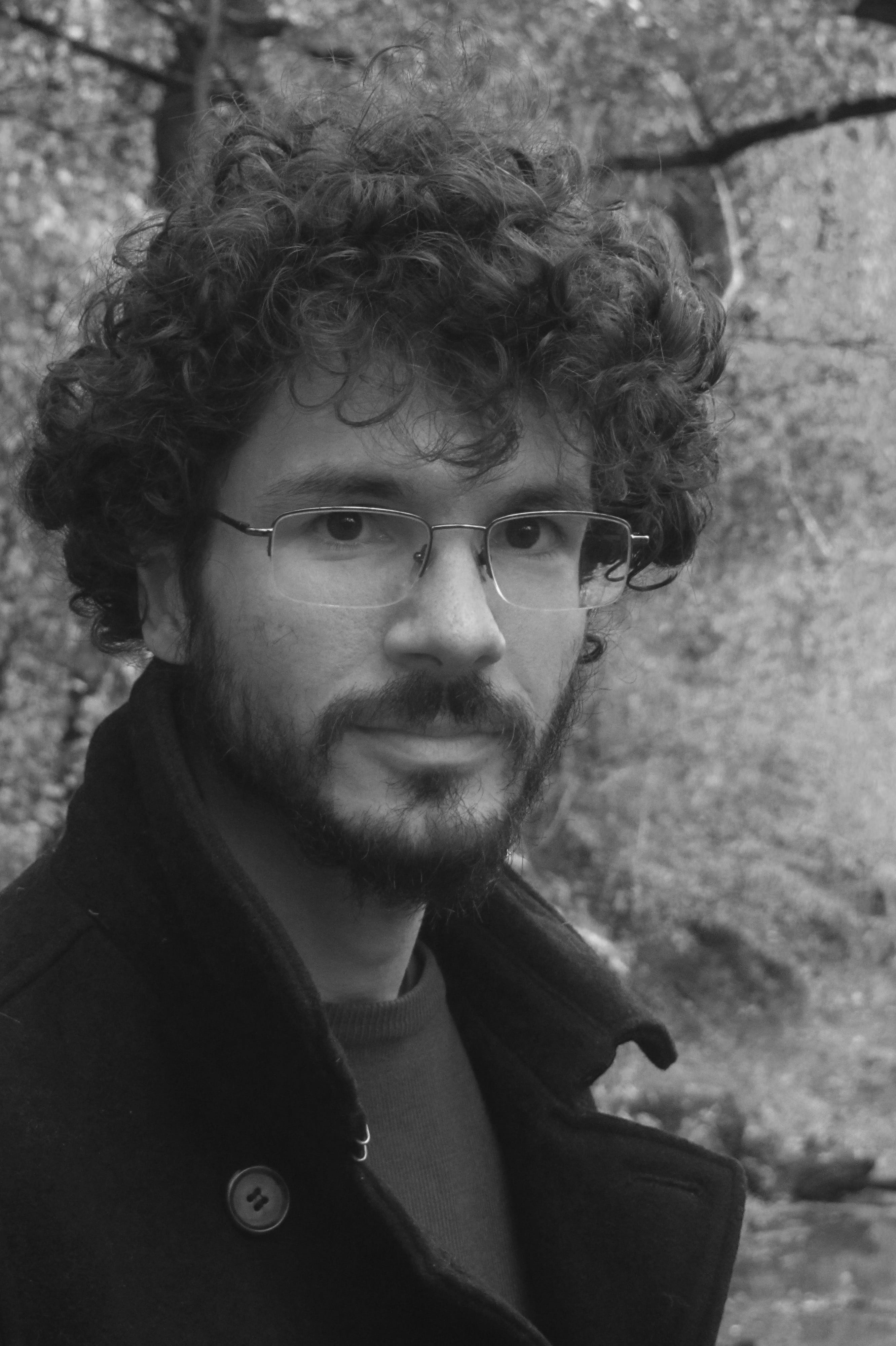
The Fig Tree Featured Poet – Stewart Carswell
Kind of night
It glitters, it fosters frost
while constellations I don’t recognise
twinkle the sky,
all those coincidences of giants and geometry
Greeks gave names to
and believed they held the future.
Tomorrow the single eastern star
will dawn unasked, blind us
with bland light. How
am I supposed to know anything now?
I’m tired. I think
we’re both tired of this now.
Stewart Carswell
Relationship break-up modelled as Must Farm bronze age settlement
What did you carry with you
when you escaped your burning home,
the walls aflame, the roof about to collapse
upon the life you could’ve lived?
Those artefacts are not preserved
here. All there is is what’s left behind:
broken pottery, burnt chopping boards,
the beads of jewellery you wore
to the restaurant in Cannaregio, three courses
and how much wine? The sunset that made them
think we were Italian. If I left you forever
I’d never forget the nerve of your lips.
And what would I carry?
Well that’s another story.
But what I’d leave is a bed frame,
broken pottery, bookcases (but not the books).
Let them get buried with all the rest of it,
lost and forgotten
like floorboards under bog oak,
excavated perhaps one day out of the blue,
the pieces put back together
incorrectly and interpreted all wrong:
that doesn’t fit there,
this didn’t happen like you’d think.
Stewart Carswell
Swan song
The swans in their thousands gift their own snowfall every winter
to the peat-blank fields that lie beyond the back fences
of the furthest houses. On days when mist clears
from the only road that regrets the dare to cross the fen
you see the blown snow drift into clumps, gathering
around the sugar beet or any other leftovers lost in the frost.
In the kitchen you boil the kettle, this cold won’t last forever
because the turning of the Earth is told in the stars,
nights with the plough spun sideways reveals true north,
tilled soil, fields kindled for tiny green flames
and the swans, knowing how long the days are now, shift their gaze
skyward and with new resolution head for home.
Stewart Carswell
Stewart Carswell lives in the Forest of Dean. He studied Physics at Southampton University, and has a PhD from the University of Bristol, and he approaches writing poetry with the mindset of a scientist. His poems have recently been published in Under the Radar, Finished Creatures, Atrium, Ink Sweat & Tears, and The Storms Journal; and he has performed poetry at the Cheltenham Poetry Festival, Poetry in Aldeburgh Festival, and around Cambridge and East Anglia. His pamphlet Knots and Branches (Eyewear Publishing, 2016) was followed by his full-length debut Earthworks (Indigo Dreams Publishing, 2021). Find out more at https://stewartcarswell.co.uk
The Fig Tree Selection – January 2026
This section features up to ten poems, with a maximum of one per poet per issue.
Hidden
I discovered the man who was never my father
in a letter she’d kept for sixty years.
Our violent separation has torn us to shreds
I lie awake at night longing for you.
Inside a diary written in Welsh, his photo. A shy
lover’s smile, his striped tie tucked into flannels.
I swear my words are true. Remember our walks?
The quarrels? Their passionate aftermath?
Was a promise made? Did moonlight guide her
as she dodged doodlebugs in her London life?
An unbreakable bond draws me towards you.
Will you write to me Joyce? Can I see you again?
He was called Howard, he was never my father;
a year later she met the man who would be.
David Harmer
The Gael
For nine hard months she carried me
and probably complained for most of them
in that rich brogue, the tongue of gael;
she endured a labour of hours, not
days as she claimed in my early years,
ensuring she would always remain
locked inside me. What remains
is an incomplete jigsaw for me
to complete as the encore years
accelerate coldly, where recalling them
is impossible but I do not
dwell on it. I searched for the gael
and the spirited girl-of-the-gael
standing firm, choosing to remain
staunchly true to Erin green and not
given to compromise. That offered me
no comfort against Irish jibes, most of them
attacking her identity over the years
but I’m half English and my years
taught me that the girl and the gael
were one and nothing would ever part them -
she was always damned to remain
woven into green, challenging me.
Rather than compromise she would not
question her doctrine and still I cannot
blame her. Aloof to neighbours for years
she created walls and barriers for me,
only one was her friend, a fellow Gael.
Her eye was lightning and still there remains
no shade of blue yet to classify them.
God’s clutches were firm so ignoring them
was a sin and something she could not
consider, leaving her content to remain
true to herself for all of her years.
I was once inside the girl of Gael,
now the mirror shows she’s inside me.
The Gael has grown stronger within me
over the years but still I remain torn
between the differences, I can not separate them.
Bob Chiswick
Sailors
Mornings, they would flip the table upside down,
stream sheets between its legs and play
at being sailors. Two sisters and a boy adrift
in seas of shadows, sharks and flying fish.
They haul on ropes, drum up winds,
peer into the carpet’s violet depths.
Cabin boy or able seaman, he is always willing:
keeping watch, dropping anchor
taking orders with a brisk aye aye sir!
One sister is kneeling at the stern
her broom-rudder trailing; the other
catches rain water in an old school hat.
Afternoons and righted, the ship
wears its mainsail as a tablecloth.
Meat curls on plates. Peas settle
in butter, the brown gravy thickens.
And when the usual row (about food of course)
becomes first storm then sullen silence,
they stare at laps, tie knots in napkins.
The afternoon drifts on towards a dusk.
In time the mother will experiment
with polenta and foreign holidays.
One sister will prowl the underground
writing on billboards, this degrades women.
And the other sister will be dead; but
for now, she is the centre of the world
and nothing can change without her say so.
Her obstinacy is beautiful,
like a swan welded to the river,
nothing can make her alter course:
she has said she will not eat and that is that.
And that is all some years ago, though
nothing happens suddenly. At sea
the future extends below the horizon
and no amount of able-seaman willingness
can make it go away. In real life,
sailors thirst for port. Once docked
they dissipate through darkened alleyways,
search out whatever beds they can,
and drown themselves in acts of love.
David Lukens
Climmer Apologises to Guillemot
I don’t feel guilty. But when the guillemot
stares at me, I feel impelled to explain why
I’m half-way down the cliff with her egg
in my hand. It’s for breakfast, I apologise.
Farming doesn’t bring in much money
and I can barely afford to feed my family.
She continues to look, unblinking, the eggs
in my sack suddenly heavy on my back.
These? I falter. They’ll be sold to the Sugar House.
You wouldn’t believe how many it needs each day
to purify sugar. When she still regards me
I shift in my halter. Wonder if I can tug the rope
without her noticing. Signal that I want raising.
I try again a final time. If there’s any left, I plead,
they’re sent to the tanneries. They need the whites
to soften hides. And the shells? They refine wine.
She gazes, considering, and then moves so fast
that rocks dislodge. Crash down around me.
When I lose my footing, she doesn’t apologise.
Susan Darlington
The Amber Frog
When it could move in space,
leaping from branch to branch of ancient trees
it was confined in time: imprisoned
in a narrow cell four months by five -
scant room in which to grow,
to eat, to mate, to die.
Master of three dimensions
slave of the fourth.
That changed when one athletic leap
landed in tree sap, thick and sticky.
More sap covered it and robbed
those long elastic legs of motion,
lungs of air, ending all flickerings of life.
But sap, set hard, preserves.
Confined in space, the frog
was now released in time
to surge past the dying
of the tree that killed it,
outlive the forest, witness
from its yellow stone the death
of dinosaurs, birth of seas.
Making its way to our time, it found
a new celebrity. Traded, treasured,
stared at by a thousand curious eyes
the frog remains inscrutable.
People may own it, for a while
but they are trapped within
their cage of decades.
The frog will travel on.
Tim Taylor
Come on, The Colliers!
A lone bugler occasionally
blasts out the right note,
where once brass bands
played, loud and proud,
to accompany striking
miners back to work.
Home of the Charlton brothers,
Wor Jackie Milburn.
Inside the little stadium
Ashington’s few hundred
passionate in their support.
A first-half breakaway
by the men from Yorkshire
is enough. No one alive
to remember the Third Division (North).
I get talking to a former keeper.
He once won the FA Vase
but now needs hips replacing.
Will a new train line push the town
back up the league? Too early to say,
they reckon in the Pigeon and Whippet.
Greg Freeman
Ikea
Vacant eyed,
Like sheep they flock
Through the modern museum
From one brand new exhibit to the next
Dressed in leisurewear
T-shirts bearing the names of American cities or universities
Or fictitious clothing companies along with the year of their inception
They congregate at the mid-point cafe
To numb the beginnings of a feeling of hunger
With the vague exoticism of Swedish cuisine
They push their food to the table
On strange, upright, tray laden trollies
Like hospital patients
With catheter bags on wheels
Sufficiently fed, they move along
Anaesthetised by dreams of altered domestic landscapes
Pondering the play off between style, practicality and comfort
They shuffle past furnishings, accessories and ornamentation
Determining dimensions with paper measuring tapes
Jotting down notes with plain wooden pencils
Outside, light rainfall is illuminated by orange streetlights
As cars roll out of the free parking
Stuffed with flat packs and tomorrow’s bric a brac.
Mike O’Brien
The Gift
When I interview the
great Leonard Cohen,
he remarks on my stammer.
Yeah, I sigh, it’s a pain,
though I think it’s why
I became a writer.
Then, he says, perhaps
you should think of it
as a gift from God.
I glare at him in irritation.
How dare he try to
sanctify my affliction!
I’d’ve preferred a
typewriter, I mutter.
Graham Lock
Old friends visit the Yorkshire Sculpture Park
Nothing is quite what it seems.
Sophie Ryder’s gargantuan hare
spreads human fingers on the ground;
in her bronze lap, a pubic frizz of autumn leaves.
Frost casts white ruts on the muddy path;
winter sun throws long shadows
of a couple, linking elbows.
They wonder if, thirty years ago,
there was a moment when
they might have touched each other.
But this intimacy speaks only
of middle-aged knees,
and a forgotten walking stick.
There are no promises to break.
They talk of other matters.
Hannah Stone
A Simple Twist
Replication error,
so simple, so savage.
The Chinese whisper,
a message is altered.
I see the beauty,
in this ugly truth.
I am it,
it is me.
Together forever,
bound by nuance,
to our final breath.
Alan Davies
Contributors
Paul Brough is a Yorkshire based illustrator. You can see more of his artwork here
Bob Chiswick is a retired musician, manager and lecturer and has written, performed and recorded songs for over 55 years. Many songs were originally poems and over the last 25 years he has sporadically let some of them loose in the poetic world where a smattering have had the ‘published’ tag attached. He writes about a wide range of issues, but has avoided underwater basket weaving as he knows nothing about it. He also has a published novel to his name.
Susan Darlington‘s poetry regularly explores the female experience through nature-based symbolism. It has been published in Mslexia, Northern Gravy, Pennine Platform, One Hand Clapping, and Ink Sweat & Tears among others. Her pamphlets include Never Wear White (Alien Buddha Press, 2022) and The Oracle of Snails (Hedgehog Press, upcoming). Follow her on Bluesky at @susandarlington.bsky.social
Alan Davies grew up in South Wales and now lives in Bath where he contributes to the Stanza 25 Poetry Group. He explores ideas fuelled by imagination and experience with key inspirations being the influence of industrial landscape and culture as well as living with chronic leukaemia.
Greg Freeman is news and reviews editor for the poetry website Write Out Loud. At the age of 70 his life changed with a move to Northumberland from Surrey. He now believes he was always a northerner at heart, and is proud of the landscape and history of his adopted land.
David Harmer was born in 1952. He lives in Doncaster and is best known as a children’s writer with publications from Macmillans Children’s Books and Small Donkey Press. His work for the Grown Ups is sometimes published in magazines. He also performs with Ray Globe as The Glummer Twins, often at the Edinburgh Fringe.
Graham Lock began writing poems in the late ’60s, had a handful published in little magazines, and edited a small anthology, In Dark Mill Shadows. Then he spent the next 40+ years writing about music. Now he’s writing poems again—and has had a handful published in little magazines!
David Lukens lives in Wiltshire. He started writing late, initially novels for young adults, then poetry. His work has been published in magazines such as Acumen, Butcher’s Dog and Under the Radar. His pamphlet One Brief Wave won the Cheltenham Poetry Festival’s first pamphlet competition and was published in 2021.
Mike O’Brien enjoys writing and performing poetry, some of his work can be found at zoomburst.substack.com. He has also dabbled in publishing other poets, who can be found at sixtyoddpoets@substack.com. His favourite poets include David Bowie and that funny looking chap with the moustache out of Sparks.
Hannah Stone is a poet, editor and convenor of literary activities including the Leeds Song festival poets-composers forum. She is currently editor of Dream Catcher journal and collaborates with composers. She has had nearly 450 poems published, including as poem of the week in the Guardian in 2023.
Tim Taylor has published two poetry collections, Sea Without a Shore, and LifeTimes, both with Maytree Press, and two novels. His poems have appeared in magazines such as Acumen, Orbis and Pennine Platform and various anthologies. Tim lives in Meltham near Huddersfield and teaches Ethics part-time at Leeds University. - https://wordpress.com/view/timwordsblog.wordpress.com
All contributors retain copyright of their work.
Subscribe below to get The Fig Tree and other news direct to your email inbox - it won’t be often, we promise!
Great way to start the new year! Many congratulations - to Stewart especially.