
The Fig Tree - Issue 11
with Featured Poet Victoria Gatehouse


Welcome to the eleventh issue of The Fig Tree.
This issue’s Featured Poet is Victoria Gatehouse, who I have heard read her poetry a couple of times recently, and whose fine nature-inspired collection The Hawthorn Bride was published last year by Indigo Dreams. I was delighted when she agreed to provide some new poems for this issue.
At The Fig Tree we try to be as inclusive as we can in the poets we publish, but of course we are only able to publish what is submitted, and the majority of the submitted poems have so far been by men. I have seen this noted by other publications, despite the fact that I see as many women as men at poetry events, workshops and so on. In an effort to equalise the ratio of men / women poets published, we will be producing a special issue next spring featuring all women contributors, including editing, artwork and writing the forward. See The Fig Tree webpage for more information on how to submit poems for that issue.
The week I write this has seen the death of two outstanding and influential poets. Firstly Tony Harrison, the Leeds poet whose infamous poem V outraged the conservative right when it was broadcast in the 1980s, but whose poetry went far beyond that. He never compromised his principles in his work, and this has left a fine legacy. Equally influential but very different in style was the Liverpool poet Brian Patten, who also died this week aged 79. Along with fellow Liverpudlians Roger McGough and Adrian Henri, like Harrison they were all working class but grew their reputations alongside the Mersey Beat music scene, which was obviously spearheaded by the Beatles. Music and poetry merged (McGough was in the pop group The Scaffold along with Paul McCartney’s brother Mike) but Patten was able to create accessible and beautifully written poems that influenced so many of his and subsequent generations. The world of English poetry has lost two under-acknowledged giants.
Ian Parks’ The Sons of Darkness and the Sons of Light, from our imprint Crooked Spire Press, was launched in October, and a Fig Tree Coal Mining Anthology will be out this month with a launch in Doncaster and another online. Ian will be reading at a few places over the next few months, so if you missed the launch events you can catch up with him as he tours Yorkshire, and maybe beyond, over the next few months. You can check all relevant dates and venues, and keep track of Matthew Paul’s readings too, at crookedspirepress.com/events.
Once again I hope you enjoy reading this issue as much as I did collating it. You are joining over 500 people who are reading the webzine on a regular basis.
Thank you all.
Tim Fellows, Editor
Contributors: Nick Allen, Tim Buescher, Oliver Comins, Susan Darlington, Victoria Gatehouse, David Lukens, Alison Stark, Clare Starling, Tim Taylor, Rod Whitworth, Rodney Wood and Paul Brough.
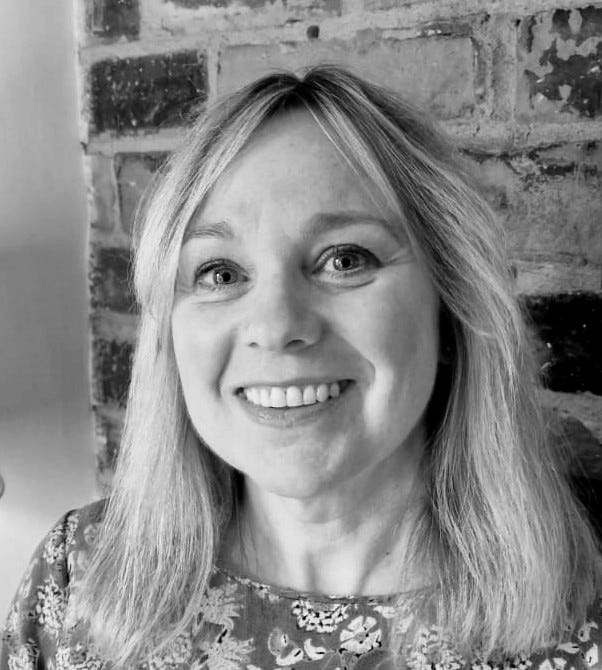
The Fig Tree Featured Poet – Victoria Gatehouse
Buck Moon
That was the summer my son grew antlers,
a creature of testosterone and light,
suddenly powerful.
There was so much he had to outrun -
the echoing length
of school corridors,
the nowhere streets of this town,
the soft ground of home.
I stood back
as he pounded and pounded
the earth
as velvet branched wild
from his head
a scaffold
for stars to latch on to,
rich and thrumming with blood,
hardening to the forest-call of autumn.
Victoria Gatehouse
The Dam and the Goats
Remember that October day
we took the path to the reservoir,
how the dam stopped us dead
in our tracks,
the looming vastness of the thing,
the colossal weight of water
it was holding back.
A surface with so little to give.
I couldn’t get past
the blank and unscalable grey.
You said,
if we were ibex goats,
we would find a slow
slant way of moving,
a sheer strength to lean against,
the slimmest of fissures
a foothold
for our rubbery soles.
And yes, stones might go skittering
from the near-vertical
faces of dams,
but we would keep on
hoof by shining hoof,
we would twist our bones sideways
to lick
the life-giving salt from the stone.
Victoria Gatehouse
Thunder Moon
quick summer storm     this charge that builds
all afternoon     strange violet glimmers
beneath the trees     the air curiously alive
each cloud     with its bellyful of waiting

the potential between ground     and sky
has grown too large     travelling from ground up
or maybe cloud down     I could never remember
and when it comes     shock wave of rain

my son strides in     luminous as nitrogen
he is speaking the language of electrons
soon he’ll leave home     study physics with those
who understand     the ions behind the strike

travelling from ground up     or maybe cloud down
I could never remember     but I’ll remember
his moment of explaining     this breath of petrichor
and stone-gleam     this white-hot forking of light

Victoria Gatehouse
Victoria Gatehouse is a scientist, poet and children’s writer. She lives with her family in West Yorkshire. Victoria’s poems have been broadcast on BBC radio and widely published in magazines and anthologies. Her pamphlet The Mechanics of Love (Smith | Doorstop) was selected as a ‘Laureate’s Choice’ by Carol Ann Duffy. Victoria is a three-times winner of The Poetry News Members’ Competition, and was highly commended for the Gingko Prize, 2023. Her first poetry collection, The Hawthorn Bride, is published by Indigo Dreams and her debut collection for children Aardvark Day is forthcoming in 2026 with The Emma Press.
The Fig Tree Selection – November 2025
This section features up to ten poems, with a maximum of one per poet per issue.
when ordinary people visit stately homes
with their high ceilings and ornate furnishings
we may gasp or exclaim but don’t kid yourself
it is not awe or jealousy    no    we are astonished
at the entitled wastefulness of it    all the damn
space you take up     all that air     the extravagant
unnecessariness of how you and your ancestors
have lived     of the smug self-satisfied belief that
you somehow deserve it     we are aghast at the ego
and embarrassed for you     uncomprehending
at how uncomprehending you are about how
the rest of us cannot abide your greed     your
flagrant bad taste in so many things     all those
bloody stuffed animals everywhere     your
unwillingness to be part of the common endeavour
Nick Allen
Bolton Abbey
I have been otherwise: glorifying Our Lord.
I have seen the ascetic times.
I have seen the times when monks grew fat
on sheep and land and power.
Now I am romantic, picturesque.
I make the view (pretty).
Rod Whitworth
The Wink
Frances stays behind wearing her sunhat
while I climb toward the Big White Buddha,
its smile already slowing my breath. Halfway up,
my legs call it quits. Gravity gets personal,
the warranty doesn’t cover knees.
I drop onto a stone bench,
shaped like it’s been waiting for me.
A scrap of paper cartwheels past. I catch it:
no pond, no frog, no leap
just the echo of someone trying.
Days of travel for a riddle
I don’t even understand.
Back home, understanding comes with
Alpha Courses, yoga mats, and a TED Talk titled
‘How to Be Still in Seven Steps.’
But here, it is the Buddha’s silence,
a hush that waits while I sweat and burn.
The pilgrims came empty.
I showed up with a camera.
A monk plucks the paper from my hand,
like it means something. A guide nearby yells,
Enlightenment or selfies, choose fast!
My fingers go for my phone before I even think.
Then the Buddha’s gaze fractures
a wink? A trick of light?
For a second, I’m not a tourist,
but just a question
the mountain holds in its breath.
On the way down, the steps
grow wings, each one a feather
plucked from the Buddha’s smile.
At the bottom, Frances is right where I left her:
arms folded, sunhat slightly askew,
holding two bottles of water like she won them.
She grins: Nice view? I nod.
She takes my hand. Let’s go home.
The coach door sighs open
to take us back to the ship,
back to our small, floating world.
We’re just passing through,
like everyone else—quietly,
with receipts.
Rodney Wood
Previously a fishpond
At this time of day,
most birds gather
at the eastern end
of the old fishpond.
They’re here to catch
humans. We bring
bags of food—a mix
of nuts and seeds,
or just breadcrumbs.
Ducks in particular
are appreciative,
the raucous greeting
of their wet laughter
echoing around us.
Oliver Comins
Paradise Lost
One book a week, all twelve from October
to St Lucy’s day and the ways of God
justified to man — or at least to us —
a long-owed filial duty discharged
to a sightless mother, who saw too well
how man’s first disobedience spoiled the show.
Each Thursday in her muggy sitting room
I read, she listened, blind eyes travelling
back and forth the ranks of fallen angels,
her heart as ever with the underdogs.
And then we’d talk about free-will and sin
and I would make the tea and remonstrate
with her belief that all will be redeemed.
We talked of Milton’s daughter, woken up
at dawn to write the lines remembered
from the night and wondered: was it freely given,
this duty to her father, God or both?
A few months later when the doctor said:
Look, your mother is perfectly able
to decide and we must all respect that,
I sat beside her in a sweltering ward
surrounded by machines that beeped and flashed
and marvelled at her quiet resolve as she
through Eden took her solitary way.
David Lukens
Taxidermied Fox and Farm Equipment, Elsecar Antiques Centre
Even now – hedged in by thresher,
snare, plough – you’re tensed for escape.
One foot raised as you survey the terrain,
girders an echo of your russet fur.
Ready to flee the pop of engine.
The snap of metal jaws. A cruel joke
to trap you where soil begets dust,
a tamed memory baked on steel.
Decades must have passed since
you last stalked the fields. But tell me:
can you still feel barley stubble
under your paws in the split second
before you wake to stale air,
a sky that blazes with electric stars?
Susan Darlington
Feria
The lorry shook,
a dreadful clatter,
a roving, frantic eye momentarily rose
above the open corner of the truck.
Confused, I thought I saw a hoof,
then realised it was horns
that crested, sank, again, again,
then stuck
and for a frightful minute hung,
jammed between the metal struts,
head wedged,
strained side to side,
till horns were grasped,
twisted rough.
And the bull fell.
Still, it tried to vault its fate,
the horns, the head, the eye,
thrust down,
each time undone,
to pounding brass on civic stage,
hoards in red and white kerchiefs
perched on every ledge and plinth
to watch the waiting posse strut,
one poised cow girl, long plait
swung mid-back,
among the leathered men
sporting jaunty trilbies,
shirts of floral, paisley patch,
some wore spurs on heels,
dug in salt and peppered flanks
of stocky, restless mounts
who’d herd the wild, crazed beasts,
wound up by hours
confined in steel
to arena and corrida
through barricaded, festive streets.
They waited,
as we waited,
craned to see
the exit of the six
and as the moment neared,
small children wove through legs
to get a better view,
no matter barriers could be charged.
rammed with unleashed power,
no matter gaps were wide,
slight bodies pressed part through,
they seemed to take the fatal risk
simply,
as fair due.
As the bolt was raised
the lorry door swung free,
the compact six burst out,
an instant bolt past cheering throng
along their route
and gone,
valiant in their doom.
Alison Stark
Stainless
Once, my sister found her dancing round the living room to Bronski Beat
and despite this being the time of her decline, it was entirely beautiful to me.
Uprooted, sent to work for her Grandmother aged 12,
shoots and branches trimmed, trapped in white Sunday gloves.
A blemish polished out by a _______ stepmother,
all these cuts and buffs left the twinkling truth.
She was small, hard and shiny; functional, fragrant -
like an oiled ball bearing in a bag of marbles.
School reports reveal a child at the top of their class in all subjects.
She never expressed bitterness at the loss of this curriculum -
turned her short arms and bright eyes to domestic perfection,
easing the emancipation of wealthier women.
Her own perpetual movement bore the wear
of backstage business in the houses of entrepreneurs.
At home, her stairs were immaculate. Everything clean, clean,
clean. She did not cook.
There was no dust on her Coulport ladies, Hummel cherubs, Bang and Olufsen
television. Her Mordaunt Short speakers were impeccable.
The coronation of Elizabeth the second
took place in her living room, as did the landing on the moon.
Tim Buescher
Undercurrents
His face was like the surface of a placid sea.
It moved, but with the languid sway of wavelets.
No breakers hurled themselves upon the sand,
no crests of white tainted the smoothness of that water,
nor was his voice more that the ghost of a sea breeze.
The storms we saw him weather made no impact on it.
We marvelled at the strength that could absorb such blows,
preserving calm, presenting still
the same unruffled visage as before.
We did not see the currents churning in the deep,
the forces that made war inside him
and yet never broke the skin. We thought we saw
right through the limpid upper layer to the man within.
We were deceived, and so we learned too late
that he was drowning.
Tim Taylor
A Day at the Crazy Golf
We’re on a never-ending walk
from the source of the Thames
all the way to the barrier.
When we set out you were a child;
now you’re tall and hunched,
kicking your way along the towpath.
At this dingy waterside caff
I turn and find you’ve grown again,
wolfing burgers and Sprite.
Late winter. They have Crazy Golf –
mildewed cement and peeling windmills,
half-submerged in rainwater.
It’s the cusp of fun –
a hint of primary-coloured years
sparks the dulled urge to play.
Out of the shabby shed we drag
a crate of faded balls,
a bin rammed with clubs.
At the seventh hole
you set the ball down in the wet,
raise the club for a strapping whack –
smash up a plume of spray –
hit the target for a hole in one –
laugh captured on a camera-phone.
Three of us in this crazy game,
swans on the grey water,
and no one else for miles.
Clare Starling
Contributors
Nick Allen is a poet and trade union activist living in West Yorkshire. His poems have appeared in many anthologies - most recently No Net Ensnares Me edited by Ian Humphreys and Apocalyptic Landscape edited by Steve Ely. His four pamphlets and one collection of poetry are available here: linktr.ee/nickallenpoet
Paul Brough is a Yorkshire based illustrator. You can see more of his artwork here
Tim Buescher is a recovering academic (with at least one toe still in the water) from Beverley, East Yorkshire. He is in the process of establishing his own independent writing and research practice. You can find him at cartographink.uk
Oliver Comins returned to The Midlands recently after living in the Thames Valley then West London for many years. His poetry is published quite widely and collected by The Mandeville Press, Anvil Press and Templar Poetry. A second full-collection is currently seeking publication.
Susan Darlington‘s poetry regularly explores the female experience through nature-based symbolism. It has been published in Mslexia, Northern Gravy, Pennine Platform, One Hand Clapping, and Ink Sweat & Tears among others. Her pamphlets include Never Wear White (Alien Buddha Press, 2022) and The Oracle of Snails (Hedgehog Press, upcoming). Follow her on Bluesky at @susandarlington.bsky.social
David Lukens lives in Wiltshire. He started writing late, initially novels for young adults, then poetry. His work has been published in magazines such as Acumen, Butcher’s Dog and Under the Radar. His pamphlet One Brief Wave won the Cheltenham Poetry Festival’s first pamphlet competition and was published in 2021.
Alison Stark started writing poetry in 2022. She was a winner in Guernsey Literary Festival’s International Poetry Competition 2024, judged by Paul Muldoon. She was shortlisted for the Yeovil Literary Prize in Poetry 2025. Her poems have been published in The Fig Tree Anthology 2024 and in The High Wolds Poetry Collections of recent years. Alison lives in East Yorkshire and works as a doctor in the NHS.
Clare Starling started writing poetry when her son was diagnosed with autism in 2020. Her pamphlet Magpie’s Nest won the Frosted Fire First Pamphlet Award 2023. She particularly loves writing about nature, and how neurodiversity can give different perspectives on the world. www.clarestarling.com
Tim Taylor has published two poetry collections, Sea Without a Shore, and LifeTimes, both with Maytree Press, and two novels. His poems have appeared in magazines such as Acumen, Orbis and Pennine Platform and various anthologies. Tim lives in Meltham near Huddersfield and teaches Ethics part-time at Leeds University. https://wordpress.com/view/timwordsblog.wordpress.com
Rod Whitworth was born in Ashton-under-Lyne in 1943 and has done a number of jobs including teaching maths (for 33 years) and conducting traffic censuses (the job that kept him on the streets). He now lives in the Garden City (aka Oldham) and is still tyrannised by commas.
Rodney Wood worked in London and Guildford. His poems have appeared
recently in The High Window, The Pomegranate (London), Black Nore Review and Seventh Quarry. His debut pamphlet, Dante Called You Beatrice, appeared in 2017. He is MC of a monthly open mic night and blogs at https://rodneywood.co.uk/
All contributors retain copyright of their work.
Hello Tim
I've held back on replying to you pending a clash with another event. My apologies therefore for you Doncaster event.
However I will be able to join your online event on the 18th to hear, and to read.
Exquisite and memorable poems. Thank you.